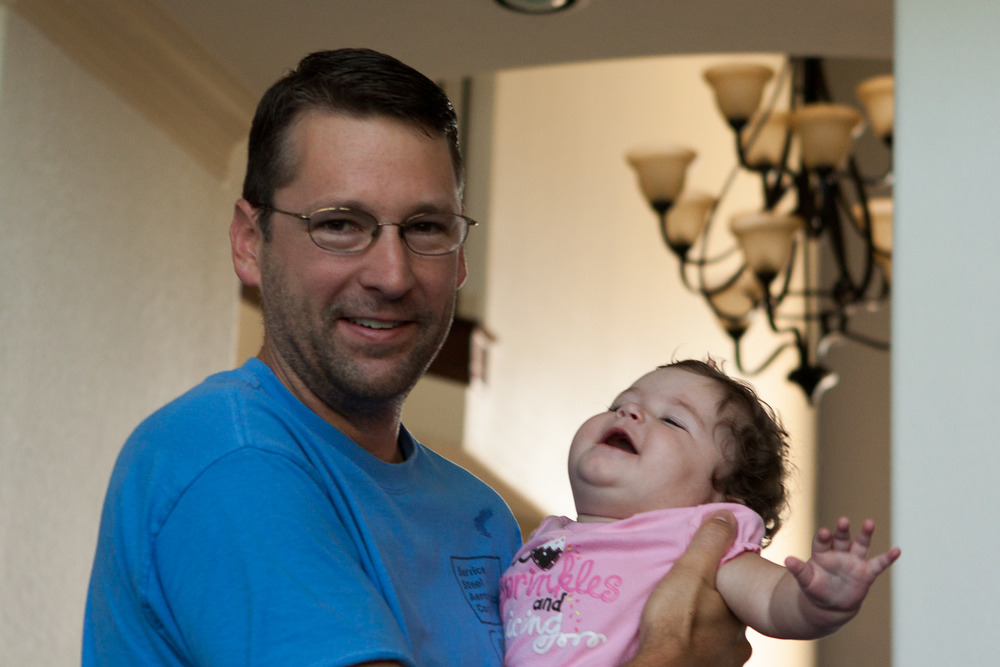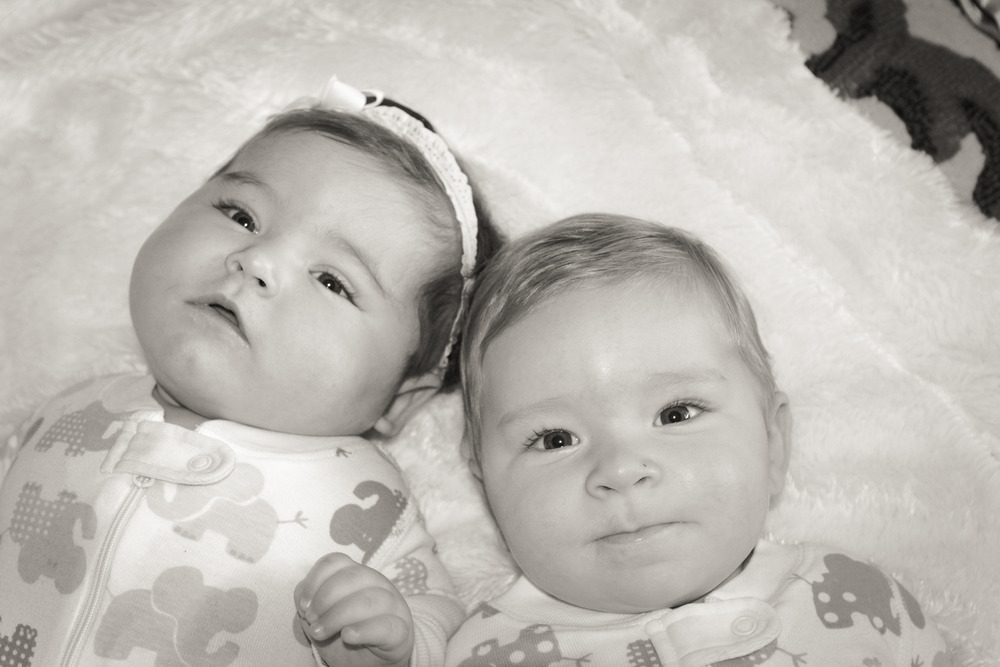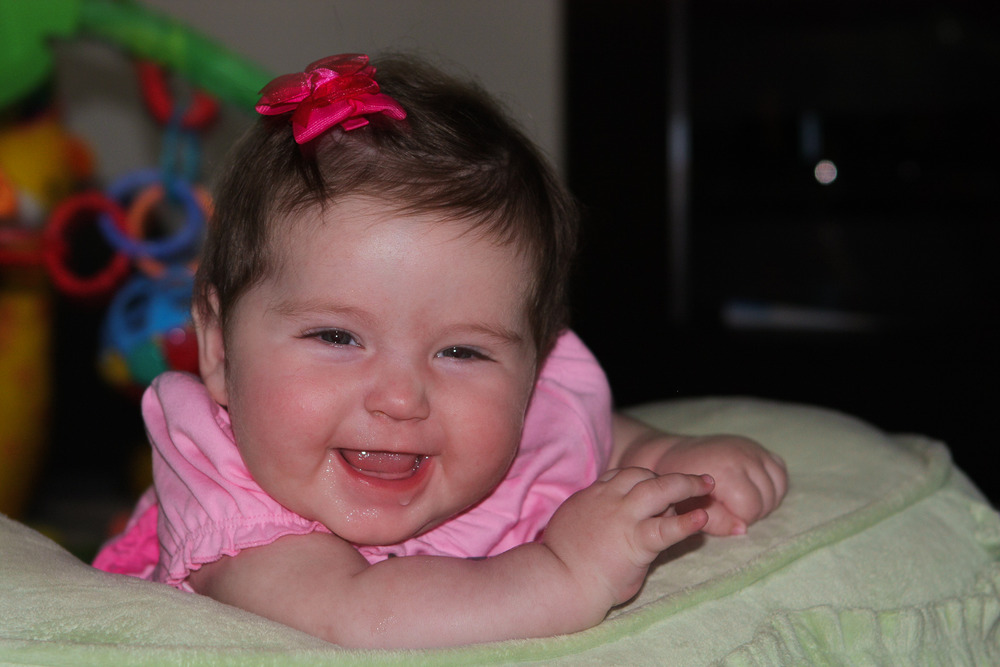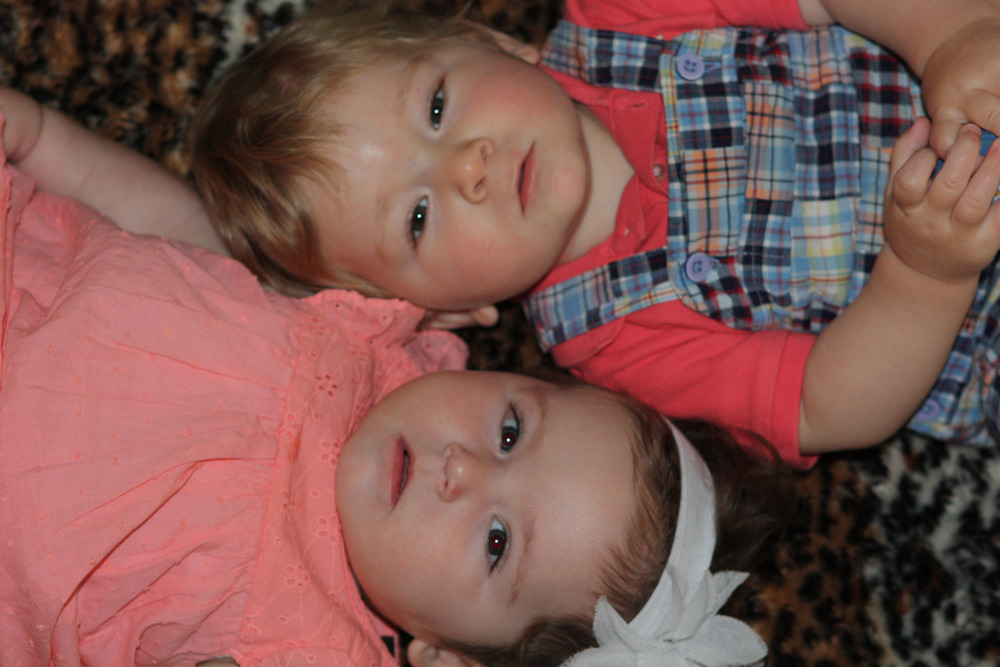
Seizures, Seizures, and more Seizures

Savanna was discharged from the EMU at TMC on August 22nd after a bizarre EEG report indicated seizures with an onset in the right hemisphere.  This is not what we had seen to this point, and it was truly devastating news.  If confirmed, this would mean that the issue with her brain was not confined to the left hemisphere, and the surgical option may be off the table.

Savanna was not on phenobarbital, but now on Keppra, and still on Sabril.  She was still having complex partial seizures, but no cluster episodes or events that required intervention.   We were in a wait, watch, and see period again.  We were given a script for the diazepam rescue medication, to be used when she won’t stop seizing.  This in and of itself was a bit scary.  Her doctor was on her way out of the country to France for about 2 weeks.  We were told of her limited availability and the reins were handed over to her Fellows with oversight coming in the form of overnight email communication.  No back-up partner or pediatric epileptologist on staff meant few people available to make the difficult decisions to help her in crisis.  We had no idea how much of a headache this would be for Rebecca and I over the next 2 weeks.

On Thursday, August 23, the situation seemed manageable.  She was very sleepy from all the activity and this was normal presentation after EEG equipment is removed.  We witnessed a few seizures, and at that time it was of great concern to us but we couldn’t do much about it.  Rebecca and I were already contemplating the future, second guessing our decision to be in Houston, trying to re-engage her doctor in Orange County, CA.  I was the lead on choosing this particular doctor, and I was feeling like I made the wrong choice.  Internally, it was really starting to bother me.

Friday the 24th, Savanna had a really great day.  Her demeanor was wonderful.  She smiled, laughed, and was engaged at times.  Then she would have a seizure and our hearts sank as it took our breath away.  We were very concerned, and wondered if this may really be the new normal.  We were not ready to accept this paradigm shift.  We noticed as the afternoon progressed, she became increasingly agitated.  That night, this agitation grew to inconsolability and we were up with her the most of the second half of the night.

Saturday the 25th, she just would not stop crying and screaming.  It was exhausting for everyone involved.  We clinically could not determine if she was even having seizures due to her extreme fussiness.  When she would finally tire out and sleep, the big kids wanted to play or do something that Rebecca and I had little energy for meaningful participation.  We noticed Tristan’s level of comprehension had increased as we tried to explain Savanna’s condition.

Sunday the 26th, was a really difficult day.  Savanna would just not stop crying.  She was rigid with her body, would not take feeds anymore, and was completely non-responsive to Tylenol or Ibuprofen.   We were not even able to hold her she was so upset.  She had to stay in her crib, in a bouncing seat, or on the floor.   We contemplated the next direction with respect to her care as we did not feel it was going well.  For a moment, we were lost.  Our natural instinct was to take her to an emergency room at a hospital.

[Sidebar:  It was Sunday, and we knew we could not to go to any emergency room as they were unable to help her due to the complexity of her case.  Emergency departments exist to stabilize a patients with immediate life-threatening situations.  Despite the catastrophic damage happening to her brain in terms of development, Savanna was not in an immediate life-threatening situation (as long as she wasn’t in status).  As parents, we felt her future capabilities were being threatened by her continued uncontrolled seizures.  This is how it was explained to us in the beginning of this journey.  Her condition and presentation was changing rapidly.  Without the presence of our doctor who could directly admit her to an EMU, the only way to permeate the membrane surrounding in-patient services is through the Emergency Department.  But, many people use the ER as their primary care, and thus it can be a concentration point for a wide variety viruses.  Illness can greatly reduce the seizure threshold for someone like Savanna.  This is a subject I have thought a great deal about, and there should be another ‘way in’ for someone like Savanna.  Recognizing these factors, we decided to manage the situation at home with the medications we had on hand – right or wrong.]

Monday, August 27, we consulted with the Fellows on her team, and the conversation resulted in re-starting the phenobarbital as they felt she may be experiencing symptoms of withdrawal.  We administered the medication, watched, and waited.  Monday night seemed to go better, but by Tuesday midday, we felt confident that phenobarbital withdrawal was not the problem.   Under their advisement we, took her into the ER on Tuesday afternoon.  I was told she would be a direct admit (meaning we would check in to ER and then move immediately to the EMU). Tuesday afternoon, I packed our suitcase and headed for the hospital feeling anxious but relieved that we were going to get help managing her situation.

Once there, a fiasco ensued.

I thought we were headed to the EMU, but the ER personnel didn’t get the memo and started a complete work up for infection and injury.  They had plans for a lumbar puncture and CT scans with contrast of her head and neck.  Complete blood panels were drawn, despite the fact that this was just done a few days ago.  I thought we would be admitted to the EMU, and she would get help right away.  Wrong.  Once again, nothing I said mattered.  Patients like Savanna are few and far between.  I could hear the conversation out of the room simply dismissing my assessment and presentation of her history and physical condition.  They were actually going down a path that Savanna was having febrile seizures, which meant provoked seizures brought on by high fever – not epilepsy.  She didn’t have a fever.  She hadn’t had a fever in months.  There was one particular attending physician, who recognized us from the visit during the prior week.  He was the only one who knew even a little bit of the magnitude of the situation and finally stepped in to change the course of care.  After two attempts, one of the nurses was successful at installing an IV.  But, Savanna was clearly altered and in state of wild hysteria.  I simply could not hold her or control her at this point.  She managed to get the end of the port in her mouth, and with only 2 teeth on the bottom jaw pulled the IV out, tape and all.  Yes, blood was everywhere.  She was having seizures all the while during this activity.  Finally, they decided to install ambulatory EEG equipment, and they observed complex partial seizures, but she was not in status.

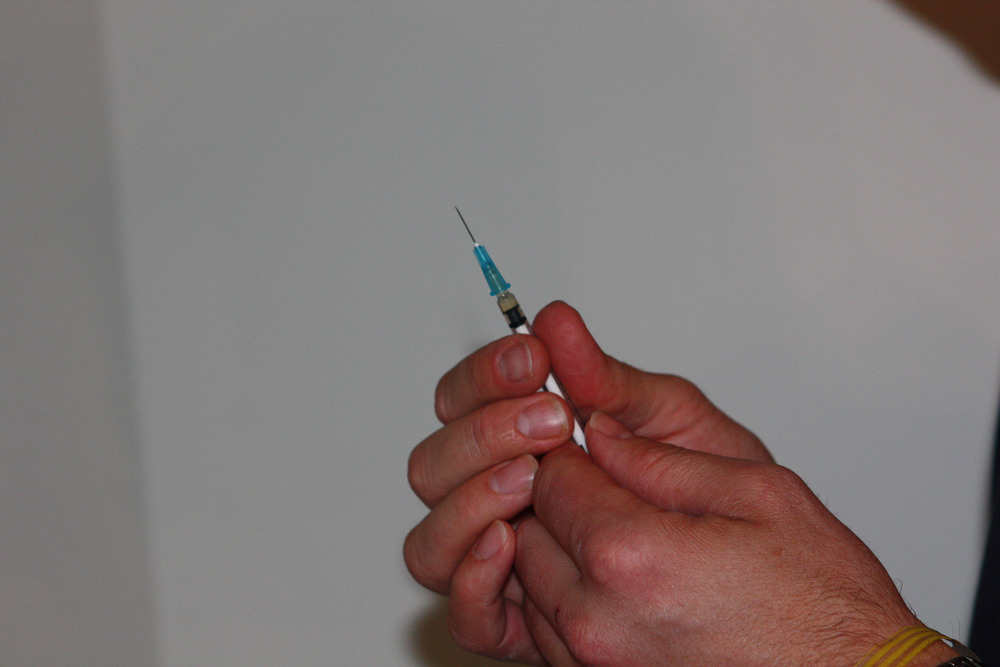
While they attempted a 3rd IV start, she started a cluster of seizures that lead to one seizure where she simply did not come out of it.  She laid there limp, almost like she was dead.  After 4 minutes, I told the nurses we had to stop for a moment – they agreed-, and I administered my first dose of diazepam.  I was sweating at this point.  She remained in a state of seizure for a solid 2-3 more minutes.  A nasal injection of versed was administered.  Finally she came out of it.   By now it was around 8 pm and the on-call neurologist made his way to our area.  I felt like he understood the situation better than most as he had a lot of experience with babies even though his focus was on older children now.  After a consult with her previous neurologist in CA, the plan was to optimize the Sabril dose, and sedate her in a controlled and scheduled manner.   It finally felt like she was being helped.  Then, like releasing a fish back into the water, he vanished.  I was never able to talk to him again that night.  She was finally admitted to the in-patient ward at around 12am.  The plan was to administer scheduled Ativan for sedation.  Initially, they were going to give her .5mg every 8 hours.

We went up to the ninth floor of Memorial Herman Hospital in downtown Houston in the middle of the night.  This is not where you want to be as a parent of a patient like Savanna.  We might as well have gone to another hospital.  After an hour of presenting her life story, again, to the attending pediatrician on the floor, they attempted to start another IV.  They failed.  Then I was told that without the IV, they would not administer the Ativan.  I found that really inconsiderate with regard to Savanna’s care given what we had been through and her condition.  The Valium (diazepam) was wearing off, and she was really inconsolable now.  Padding had to be added to the inside of the crib to keep her from hurting herself.  After another hour or so, I could sense another large seizure episode and when it started, I did not wait to use the diazepam this time.  I administered it quickly so she didn’t have another 10 minute seizure.  I also provided relief from the seizures for about 4 hours.  After being berated by the attending pediatrician for administering it myself 5 hours after the previous dose, I knew it was time to go.  Help just seemed far away until the pediatric epileptologist was back on the case.  The attending pediatrician was intent on letting her seize for at least 10 minutes before helping.  They didn’t even have diazepam prepared on the floor.  It was completely negligent in my opinion.  This was simply not acceptable to us after what we had learned that past few weeks.  Her presentation during her complex partial seizures was a-tonic and for a baby that simply looks like she is sleeping.  I actually had heated exchanges with that attending about the seizures and she simply didn’t want to listen.  Savanna had seizures while I was talking with that doctor, and she simply did not agree.  I knew we had to get out in order to get help which seems completely counter-intuitive.  But, we had more ability to get medication outside the hospital in this case.  Our plan was to get her home, get the Ativan, and administer it at home and deal with consequences.

Wednesday August 29th, Savanna was discharged and had a significant seizure event that required intervention.  I did see the Fellow on her case, and he indicated they were going to give us a script for Ativan that we would administer at home.  He also agreed the situation was less than ideal.  We received a seven day supply of .5mg pills (one pill per day).  Friday night we got the script filled and used it for the first time.  We were nervous about using them at first.  They did seem to provide Savanna some relief to the agitation and anxiety she was experiencing.   [Over the next 2 weeks, when her epileptologist was back on the case, we would give her 9mg per day and some days 18mg in an attempt to manage the seizures.]

Thursday into Friday September 1st, were all about the same.  Savanna was not happy, and having at least 75 seizures per day.  We started charting each event, looking for a pattern.  I was spending at least 30 minutes out of every hour sitting and watching her.  It was overwhelming.  I felt like I couldn’t do anything unless she was right there in visible sight.  Andrea’s capability was reduced to simply just sitting and watching her for about 6 out of her 8 working hours.  Frequently, we would see a cluster pattern, and have to administer diazepam.  It became a very intense situation.

Saturday September 2nd, she was the same, but Rebecca really got a chance to witness big events.  It was devastating to her.  The situation seemed completely out of control to us.  We decided to take her to the ER, against all out loud conversation about what we thought would happen.  We were banking on our doctor being reachable by phone now, as she was supposed to be back in the country.  It turned out to be a bad bet.  Anyway, once at the ER, another idiotic waste of time began.  I actually had a conversation face to face with a young neurologist, whom I asked this question, “If your child was having five to ten uncontrolled seizures per hour with the history of my child, would you sedate your child heavily?”  He responded, “Yes, but I won’t sedate your child. It is not in our protocol.”  At that moment he walked away, and I knew again we had to leave if we couldn’t get into the EMU.  It was a waste of time to be there.  I was communicating with Rebecca during this, and we could not have felt more lost as parents at that moment in time.  Out daughter was having 5-10 seizures per hour, and we could not access services that would be helpful.  It wasn’t just perplexing, it was unbelievable.  Meanwhile, Rebecca’s Dad was on an airplane coming to help us.  After further consultation with Rebecca, we decided as a last resort to try Texas Children’s ER and see if we could get some traction.  I got Savanna out of the Memorial Herman ER and drove the 1/2 mile down the street to the Texas Children’s hospital. (Yes, they are all in one place in Houston.) After 4 long hours, it became clear that they were not going to help either.  They didn’t even have a neurologist attending, only on-call.  That went nowhere.  Rebecca and her Dad arrived in the ER around 1am, and a near argument takes place between Rebecca and I about Savanna’s care.  These are really difficult times and we each have our moments where we think we know what is best.  Once we heard the on-call neurologist recommend no changes to her care and to come see him in a month or so, I knew we were definitely in the wrong place.  Waiting overnight to see a neurologist that was only going to say the same thing in person the next day, wasn’t going to help either.

At this point, what do you do as a parent in this case?  I invite all of you in the medical field to chime in and tell me where we went wrong.  Tell me how to getting help for our daughter would have been easier.  We are on our knees begging for help, yet no one is listening.  We seriously contemplated catching the next flight back to CA to have her original epileptologist take her care back over.  We called CHOC and they said they would admit her immediately, but strongly advised against flying, as she could die if she went into status, and emergency care was not immediately available mid-flight.  We asked if it was possible for our former epileptologist to direct her care from CA at a hospital here, but that’s just not the way these things work (due to the potential for liability).

We were exhausted and desperate.

Admission to the EMU on Tuesday September 5th, could not come soon enough.  Savanna’s doctor is back in country and on the job and we could be more relieved. I knew we just had to gut it out until then.  These are really difficult learning moments in life.  I commend Rebecca’s Dad for stepping in to help, but it takes time to absorb seeing a baby in such a condition.  While we know it was overwhelming at times, he was very helpful and we thank him for his sacrifice.

Sunday September 3rd, was more difficult.  We got a much needed refill of diazepam at the local CVS and felt like we could make it to Tuesday.  We had a conversation with our doctor and she was prepared to admit her to the EMU over the weekend, but also said she would not be there to manage her care.  Tuesday September 5th, was now the scheduled admittance, as Monday was a holiday.  We have come to dread the holidays, as these seem to be the times when Savanna needs the most help, and yet the resources to help her are least available.  Savanna was to start the Keto-genic diet that week as a last resort to control her seizures.  Rebecca and I were contemplating our choices and what would be best for Savanna.

[Looking back, I made a mistake.  Not having all of her official records in one place, and ready for review wherever we went, was a mistake.  A person at the Hospital in CA recommended we do that, and while I had many discharge notes from hospital stays and pediatrician notes, they really did not tell the entire story.  Since then, I have acquired all of the official neuro output notes, lab results, test results, EEG reports, MRI reports etc.  I have parsed them into separate PDF files and make sure they go with us everywhere.  While this may or may not have altered the course of history, it could not have made it worse, that is for sure.]

She was not stable and traveling was against all doctor’s recommendations.  Her doctor was still away in France and just not reachable in a reliable fashion.  We mulled the decision on ‘what to do’.  Starting over with another group was more or less out the window after a lot of discussion.  Diagnostically, they would accept the records, but would without doubt want to run their own sets of tests.  Rebecca and I started to realize that Savanna may need surgical action sooner than that schedule would allow.  We spread out our medicine on hand, even if just mentally, and I told Rebecca I felt like I could make it back to CA with what we had in terms of rescue medicines (assuming I could get her on the plane).  Savanna was having 5-10 seizures per hour now, and we felt completely helpless.  This was when we really realized how special her doctors were, and how few of them were spread amongst the population.   We decided to gut it out, watch the seizures, and go with the advice of our doctor here in Houston.  Formal second opinions would have to wait until she was stable.

We did our best to stretch the medications, but Tuesday around 1am, we administered our last dose of diazepam.  We were out of Ativan too.  We had exhausted our medication cache, and we were out of options.  The only responsible place to could go was to the EC at MH.  I packed her up and we took off for the emergency center downtown.

Once there, even though we were on the list for admittance, I still had to go through the EC.  The poor nurse taking triage information had no idea what was coming.  I was so infuriated after 30 seconds of answering her check box questions that we got into an argument.  After I told her that I just gave her 1mg of Ativan and 5mg diazepam to stop her seizures 2 hours ago, she proceeded to ask me if Savanna had ever had seizures.  Steam was coming out of ears, and thank goodness a doctor intervened, and moved us to a room, because I was about to unload on that poor person.  It was such a pointless act of futility but one that must take place during each EC visit.  You are at their mercy and they know it.  The doctor understood, and once we had a 1 minute conversation with him about what we had been through, the amounts and types of medicines she had been given (at home), that was the end of our hassle in the EC.  No other person bothered us with the exception to make sure we didn’t need more medicine, until it was time to move to the EMU.  I thanked that doctor for simply listening to me and taking me seriously.  Even though he himself was not a parent, I think there was genuine empathy for Savanna’s situation.  His professional common courtesy and respect for my knowledge of Savanna’s needs was refreshing.  I am certainly not a doctor, but I have become an expert in her general daily care and management.  At 3 in the morning about 2 weeks after the start of this ordeal, I finally felt like we were on a path to getting some help.  It had been a really long and difficult period in which our respect for pediatric epileptologists grew immensely.

We really just didn’t take a lot pictures during this period.  But, I do have a couple of iphone videos that are interesting.  One shows our oldest boys, Tristan and Brandon, as Daddy is at the house in the morning getting ready to head down to the hospital and take over for Rebecca.  We were sending Mommy a video text to let her (and Savanna) know we are coming.  The second is a rare moment during this time period when suddenly she seems ‘okay’ or at least a little happy.  We are in the EMU, 2 days into the Keto diet and on 9mg of ativan per day (that is a lot for a little baby) in this video.  It doesn’t entirely fit with this post, as I have not written about this stay just yet, but I have to put up something 🙂

-Mom and Dad

Ken and Rebecca Lininger

Complex Partial Seizures – The New Normal

20120815-img_265520120812-img_238620120813-img_241620120813-img_244420120813-img_246720120813-img_249820120814-img_250720120815-img_259220120826-img_2700

August 16th, 2012.  As I walked into CHOC (Children’s Hospital of Orange county) carrying Savanna, there was a calming familiarity.  Recognized by the admissions staff and 5th floor staff, it felt like a homecoming of sorts.  This was supposed to be a periodic monitoring with expectations of nothing new.  Once you mention she is probably having seizures of some kind the tone of the conversation changes quickly.  Most of the nurses and tech’s we knew didn’t realize we had made the move to Texas already, so conversation about the move helped lightened the tone.

Once the EEG equipment was in place, it was a waiting game.  With infrequent seizures, this time can really pass slowly as her aggravation with the head-wrap grows.  There is little I can do, and I have to stay sharp to catch her seizure when they occur.   My indication of abnormal activity helps queue the technicians monitoring her EEG output more closely during those episodes.   She had a couple of events throughout the afternoon, but then at 1:15 am Friday morning, she had a cluster episode.  Consultation with doctor later that day confirmed our fears.  The EEG indicated the seizure originated from the left posterior temporal lobe, which is where she has always had abnormal activity.  This was a new seizure type though, so the first step was to try to control the seizures with medications.  She needed to be stable before traveling back to Texas, and I was planning to drive back with her and the family in two days.  What came next was significant period of learning as a caregiver and parent.

Savanna was ‘loaded’ with Phenobarbital around 4pm Friday as a first attempt to arrest the seizures.  Not sure why they use the term ‘load’, as the loading dose is no different than the next dose which is called maintenance, even if on a titration schedule.  Anyway, she slept almost immediately with initial load via iv.  She slept for nearly 7 hours and then awoke completely altered.  Her hysteria and rage was something I had never seen before in person.  As a parent you see pain from emergency procedures (broken bones, sutchers, etc.), you see the ‘breakdowns’ of toddlers, colic of infants, but this was different.  The next four hours I had to manage a possessed child.  Finally, she gave up the fight and went to sleep.  I was exhausted and emotionally distraught.  I didn’t know what to think.  Was this the new normal?

After her first maintenance dose of phenobarbital, her anger subsided to extreme fussiness (yes, extreme fussiness was better than before), and then she just seemed to become absent to me.  I had a final discussion with the doctor about her disposition, and took away from the conversation that her extreme fussiness may or may not be the drugs.  The reality set in that this could be the progression of her disorder in her brain.  As she grows, the situation can change quickly with regard to her brain.  Her doctor felt she was safe to travel, so she was discharged just in time to attend Rebecca’s brothers wedding reception.

It was very refreshing being around family, but 50 hours straight in the epilepsy unit as a lone parent of a sick child requires some decompression before re-entering society.  Not having that, I felt somewhat out of touch with what was going on around me.  There can be a general lack of concern for rules.  Disciplining my kids for bad behavior is more difficult during these first few hours outside the hospital environment.   I felt detached from the situation and the one focus of my last 50 hours was now taken from me and being passed around.  I watched my daughter go from person to person, and I could see how far away she was her in disposition.  All I wanted do was hold her and I didn’t need anyone else to do it, but I didn’t want to take that time away from the other family that was there either  as they don’t get to see her often.  We were warned that her seizures could start again, which really put me on the edge.  As a parent, you try to be positive and behave maturely about the situation,  but when she was out of my sight for more than a few minutes that night, I found myself nervous. 

We finished up that night early, and were able to get her settled back at the rented house in Long Beach.  We spent some time in the hot tub, and I remember familiar thoughts from months past.  I remember being almost comatose mentally after the time in the hospital and then being ‘on’ for the other kids for several hours.  It just takes time process the information after you leave the hospital.  I awoke the next morning to the first ‘daddy, can I have…’  Rebecca had already boarded a plane to get home early to prepare for work.  I packed the van and tried to get going quickly.  After a few hours, I had to laugh.  El Paso by nightfall was out of the question given our late start, so Phoenix was the new way point.

That evening in Phoenix,  Savanna seizures returned.  Still inexperienced at dealing with this, my heart just sinks and then a sense of urgency overcame me.  I didn’t know what to do.  It was like I got hit with a sucker punch.  I called Rebecca, and I could hear her concern as she felt a million miles away and helpless.  We were both calling the on-call neurologists in CA and TX trying to get someone to help us.  Finally, I worked though my options with the on-call neurologist with the new team in Texas.  We decided to increase the Phenobarbital, then monitor her condition.  Savanna was really cranky that night and neither of us slept well.  We got on the road the next morning to El Paso and the seizures started again.  More consultation that evening in with the neurologists left me in a real predicament.  The phenobarbital  dose was maximized, even for in-patient care.  Savanna was heavily sedated, but still having seizures.  With no diastat on-hand, it was risky making the trip from El Paso to Houston.  I decided to try to make to Houston as my options in El Paso were very limited with the family in tow.  I investigated pharmacies on the way that had diastat in stock and made note of their phone numbers and locations.  The next morning was nerve racking.  Quickly through a continental breakfast and on the road, right?  Right.  Has anyone tried to get a 2 or 4 year old to eat a good breakfast quickly?  After a big mess and multiple times to the bathroom to make ‘pooh-pooh in the potty’, I packed in the van and we finally started to haul a$$.  Through the city stretches were painstakingly slow, and we had to stop at least a few times totally almost 2 hours.  Once on the open road in Texas, it was a different story.  The manual for the Yakima roof box indicated not to exceed 70mph, but I can say with confidence, it is qualified for a much higher amount.  750 miles and less than 10 hours of driving later we met Rebecca near our house to transition Savanna and I to another car as we planned to continue straight downtown to Memorial Herman EC.

[Sidebar:  Yes, she was having seizures.  But, we had not yet seen out of control, dangerous seizures.  And, administering Diastat for the first time in the middle of the desert in Texas was not a good idea.  In the end, I am glad no one gave me the script.  I was not ready to use it, and if she had gone into respiratory distress in the middle of nowhere, I would never have forgiven myself.  Unfortunately, during the coming weeks Savanna would educate me about when Diastat is needed.]

Once at Memorial Herman EC at the Texas Medical Center, she had several seizures in the waiting room of the EC.  It was not until then did they feel this may be important.  I remember being furious, listening them talk about what they had for lunch while my child was having seizures.   I finally was able to get the attention of the staff.  I was very aggressive in my demeanor, and end up apologizing more than once for being  a bit too rude.  However, I have learned, no one will advocate for your child but you.  Few people know your child as well as you.  A neurologist on call was able to see Savanna and within 10 seconds of holding her she seized.  He agreed with my assessment that she was having seizures, big surprise, and should be treated.   She was admitted, she was ‘loaded’ with Keppra, right away to try to control the situation.  It was not the drug of choice, but without the results of the POLG 1 gene mutation test, it was one of our few safe choices.   She had rough night, but now seemed as though she was getting help.  We moved to the EMU (Epilepsy Monitoring Unit) at Memorial Herman in the early morning hours where she was hooked to an EEG monitoring unit.  After 24 hours, we were told that she was having seizures originating from the right and left side of her brain.  We were devastated.  Up until now, we had this hope that the right side of her brain was more healthy, and maybe she could still thrive if a hemispherectomy was the procedure of choice (this is where the entire left or right half of the brain is removed).  She is still so young that the plasticity of the brain would compensate and she could still develop with relative normalcy.

So she was released from the EMU, off the Phenobarbital and Keppra and her seizures were somewhat improved.  The day of the release, I spoke with the doctor, and there were statements like “You may need to accept that your child will have a normal pattern of seizures.”  We were absolutely crushed, as we could already see her milestones dissolving, again.  We honestly felt like the situation was hopeless.  I called our epileptologist just before she was to board a plane for France for 10 days, and had another short conversation that provided some relief about that subject. But still, I could hear the general concern in her voice about Savanna’s future.  It was a very helpless feeling, as Savanna’s new normal was now complex partial seizures.

-Dad

The Honeymoon Period

So a few weeks after the final dose of ACTH, some of the major side effects are dissipating.  She still has a NG-tube in her nose, but no cannula taped to her head as she no longer needs supplemental oxygen.  Her blood pressure is returning to normal even as we titrate her hypertension medication down.  Her mood and disposition are improving, and her awake times are increasingly filled with happiness.  There still exists daily periods of inconsolable crying and fussiness.  I think as we embrace the probability of this activity, it somehow seems easier to manage.  Now that her brain activity is stable, she has started to develop again, and it almost seems like we are starting over at day one, but she is nearly 4 months old.  This good response with dissipating side effects in the world of pediatric epilepsy, is commonly referred to as “The Honeymoon Period”, as it is filled with joy, development, and seizure freedom (or at least good control).

We are struggling with bottle feeding a consultation with the GI doctors results in the decision to install a permanent G-Tube.  She isn’t aspirating, but her suck is weak and she tires quickly which shortens the feeding cycle.  The doctors feel she isn’t getting enough nutrition, and as a result, decide accelerate the procedure timeline.  So, a Monday morning clinic visit transformed into a 3 day hospital stay. The process was multi-staged.  She first had a temporary g-tube installed where the tube was inserted into her stomach through her mouth, and then out the newly created hole to the outside world.  The end of tube in her stomach has a large disc that cannot be pulled through the hole and aids in creating compression in the tissue layers.  This apparatus had a fixed length of tubing that we had to manage with tape.  This was left in place for about 2 months while the tissue fused together fully to create a clean hole directly into her stomach.  At this point, back to the hospital to remove that tube and install the peg style tube we have now.  It is inserted into the hole and then a balloon is inflated on the end of the peg inside her stomach with water through a special port on the device.  It is quite ingenious.  It is low profile, and while still odd to the inexperienced caregiver, very durable and easy to operate.  [Looking back, it was probably the single most helpful prophylactic measure we took for Savanna’s health.  It was great advice from honest doctors, and we were really fortunate to have listened to their council.]  Savanna never liked taking medications orally, so all daily medications go through the g-tube.  her discomfort from the procedure was minimal in the grand scheme of things.  A day or two of pain, but after that, very easy to maintain.

As we entered this Honeymoon period, she continued to respond well to the medications and began to thrive.  There were certain times that were still difficult, but we really needed to take full advantage if these ‘good times’.  She clearly had significant developmental delay that was global in nature, and it was time to start occupational and physical therapy.

So, therapy includes working on gross motor skills such as rolling over, reaching for things, sitting up etc.  She really dislikes ‘tummy time’, and she struggles with putting weight on her arms and legs.  To this day, it is a significant focus of her care.  We also work with her on fine motor skills, such as holding toys in her hands, switching a toy from hand to hand.  Cognitive development is stimulated with texture books, musical toys with lights that require input to function.   While all different, many if these skills are combined when working with her.  In addition, we will have to work on her social skills, language, and feeding.  While safe for her to eat thick baby foods, she has a pretty strong aversion to having those foods in her mouth. 

Seeing her smile at us and begin to follow us with her eyes was the best feeling in the world.  Rolling ever came easily and quickly with our other children, but was a huge milestone for her that we celebrated.  To see her refuse to put weight on her arms and legs is increasingly frustrating.  With each passing day, the real magnitude of her delay and her ability to learn is becoming clear.  Many milestones that Austin, her twin brother, breezes through are major accomplishments for her.  In spite of her challenges, Savanna honestly appeared as though she was experiencing some level of happiness at times, and it was great to witness.

During this time we made big life decisions that included moving the family to Texas, and buying a house.  Rebecca had the ability to make a lateral move within GE,  so we decided I would stay home to raise kids and manage Savanna’s care.  This seemed like the natural progression for our family, but it has been a significant adjustment for both Rebecca and I.  We made the move to Houston mid-June.  [We have looked back a few times with respect to Savanna’s care.  Her case is so complex, that there needed to be a transition period between the neurology teams.  Fortunately, her doctor in CA is genuinely concerned for her well being, and has provided  guidance and leadership through consultation a number of times as Savanna’s condition has changed significantly since moving to TX.]

We are starting to get the house settled and it definitely feels like the right move overall.  Tristan and Brandon are enrolled in a faith-based preschool program that allows me a couple of hours a day to focus on all aspects of Savanna’s care.  They met new friends and are really enjoying our new home and nearby lake.  Austin has just taken off with his development.  He is right there with the big boys throughout the day and is on the cusp of walking.  The boys truly are a joy and really help keep the keel of our ship even.  So, we knew we were going to make a big trip back to CA for David and Brittany’s wedding.  Not knowing who Savanna’s Epileptologist would be in TX or if we might experience a lapse in care, we had scheduled a routine 36 hour video EEG at CHOC where we have already spent so much time.

So, we knew we were going to make a big trip back to CA for David and Brittany’s wedding.  Not knowing who Savanna’s Epileptologist would be in TX, or if we might experience a lapse in care, we had scheduled a routine 36 hour video EEG at CHOC, where we have already spent so many hours.  We were really looking forward to that, as we would also get to consult with our Epileptologist about our current situation in TX.  So we were excited on all fronts to make the trip.  After all the preparations, Rebecca arrives home from a short shipping spree at the dollar store with the boys after school,  and we are off.  It is a long, long drive to CA from Houston, and this is where Savanna’s journey takes a somewhat unexpected left turn.

We arrive in CA, and on the first evening unfortunately witness Savanna have a seizure.  We both say it and knew right away what we saw.  We saw both eyes deviate to the left and complete loss of tone.  It escalated rapidly, and she began to have cluster episodes over the coming days.  Fortunately, we had the 36-hour VEEG test scheduled so we did not have to penetrate the thick membrane in the bowel of the hospital to receive appropriate care (otherwise known as the emergency room/center).  We were warned that this would probably happen to Savanna, but what transpired after that day no parent can plan for emotionally.  It was devastating.  We both knew what the future could bring for Savanna and often wondered what path’s she will take on her journey.  Not knowing when her situation was going to change, keeps us in a constant state of heightened awareness, and it is exhausting.  Apparently, the time for some change is now.  As we drove to the hospital together August 16th, the moment was somber and old emotions about our new situation were bubbling up from many moons ago.  Even though the words weren’t spoken, we both knew ‘the Honeymoon was over’.

-Dad


20120402-img_157220120518-img_191520120518-img_192320120519-img_194020120519-img_192820120519-img_195320120519-img_196720120528-img_198320120604-img_206320120607-img_208520120625-img_225720120604-img_207220120621-img_217620120720-img_2363Img_0306Img_0340Img_0461Img_0462

(Ken Lininger)

Life on ACTH therapy and Vigabatrin for Infantile Spasms

Savanna had been on the ACTH for about 8 days when she experienced her last Infantile spasm.  When she did not have a cluster on December 28th, we were beside ourselves and honestly didn’t know what to think.  She was healed, right?  Wrong.  A routine EEG would confirm lack of hypsarrythmia, lack of discontinuity, presence of normal sleep patterns, but also some abnormalities.  Savanna was still experiencing some clinical events typically effecting her eyes and head.  Even though we were just reaching the highest dose of the ACTH, it was decided that its affect on Savanna (the good part anyway) was at or near maximum.  She was started on Sabril (Vigabatrin) January 1, 2012.  That was the second front-line medication intended to treat the Infantile Spasms.

Within a couple of weeks of the start of ACTH, Savanna had lost most milestones she had reached as a result of the seizure activity.  She stopped smiling and laughing.  She was considered low tone clinically.  She slept the majority of the day, only awake about a half hour out of every four hours.  At least half of that time, she was really fussy.  She appeared to be blind, as she did not track anything with her eyes, and never seemed to be ‘looking’ at anything – just blankly starring. We were told her pupils were normal, and the problem with her vision was her brain.  It was a very dark period for us as a family.  Trying to understand why God allows such suffering was a recurring thought in my mind. 

By the middle of January, Savanna was about half way through the ACTH therapy when her health turned for the worse.  We noticed she was having an increasingly difficult time feeding.  She had now lost command of the breathe/swallow muscle control and was aspirating feeds into her lungs.  She had grown enormously in her face and legs.  Her cheeks were the widest part of her face.  Her hair had turned wiry and was growing fast.  She began to grow facial hair.  One day I came home from work and sat down to give her a bottle, which was our normal routine, and she didn’t  take the feeding as she seemed really congested.   She was coughing a lot and seemed almost like she was choking.  I administered a dose of inhaled albuterol, and it seemed to make the problem worse.  I opened her outfit to look at her respiration rate and was shocked to see her belly contracting inward so hard.  (This in the end, was the result of chronic and increasing aspiration of feeds combined with her inability to adequately clear the fluid due to her low tone.)  She was in respiratory distress and we had act quickly.  I hastily packed a bag, and took off for the children’s hospital.   

Once there, it did take some time to penetrate the membrane that surrounds the ER and in-patient facility.  Triage took all of 15 seconds as the nurse listened to her and said she was in real trouble.  I was told I would be taken back very soon, despite the overflowing waiting room.  An excruciating 45 minutes later, the calm before the storm was over.  I walked quietly through the doors to meet doctors, nurses, technicians into what seemed like utter chaos.  More or less dismissed as an important person in her care, I finally met the doctor orchestrating this effort involving at least 20 people, and I could see the genuine concern for her well being in his eyes.  Within a few hours, she was admitted to the children’s hospital where the gravity of the situation became more clear.  Her respiration rate was steady in the high 80’s, and she could not stay saturated without a strong flow of oxygen.  What became the next 18 days, was a very difficult experience as a parent.  Getting a successful IV started was in and of itself a significant event, as what normally takes a couple of people a couple minutes, took teams of PICU and NICI nurses hours.  It was painful to watch.  

In and out of the PICU, the helpless feeling was ever present. The doctors seemed to have few options left as the treatment eventually became a wait and see event, (of course with a plethora of drugs being administered around the clock).  Depending on which doctor you spoke with, the consolidation in her lungs was probably bacterial pneumonia according to some, and viral pneumonia according to others.  She was given 3 different strong antibiotics, a lung drying agent, and stronger blood pressure medication.  She contracted a fungal infection so bad on her rear, that the Infectious Disease team became involved.  We lived at the hospital, and it was a real strain as we each tried to maintain a presence at home and in our workplaces.  Being ‘fun’ for the other kids was very difficult after a night at the hospital and then a day at work.  Rebecca and I barely saw each other for 3 weeks and the strain on the marriage was significant.  More than once I found myself in that dark hospital room late at night with tears in my eyes trying to grasp the magnitude of the overall situation.  I found myself weak in the face of some of the adversity in front of me.  The effects of those 3 weeks permanently changed my perspective on certain aspects of human existence. 

As if it wasn’t difficult enough… I remember getting a call one day near the end of this particular ordeal at about 8 am from my boss.  He was wondering where I was and when I  was coming in to work, as though I had slept through my alarm.  I had just dropped the big kids off at daycare after Rebecca and I made the early morning switch at the hospital and I knew at that moment something had to change in our lives. While I was working a lot overnight remotely from the hospital, it went mostly unseen.  It did not replace my presence in the facility.  I remember that phone call feeling very cold and inconsiderate.  Over time though, I gained an understanding of  the other side of the relationship.  Once this happens to your family, you experience a paradigm shift while those around you do not as normal life does go on for everyone else.  Recognition and acceptance of this fact is critical in order to move forward.  Your perspective changes (along with your circle of friends) over time.  You see things around you that you may not have ever seen before.  You see other families with special needs kids living life at times, and this becomes an area of interest rather than something you ‘look through’ when observing from afar.  This is an evolving process and we are still learning as Savanna is changing.

Savanna finally went home in early February with oxygen tanks, a pulse-ox monitor, a nasal-gastro-intestinal tube installed, a feeding pump, and a significant panel of medications. The day before she went home, I was with her, and witnessed a smile and almost laugh that we had never seen before.  I captured it on my phone and will never forget it.  The feeling was like your first breath after being underwater too long.  It was a glimmer of hope for us. The next few days saw the final ACTH injection and numerous medications discontinued.  While the side effects from the ACTH were present for months afterward, her neurological progress was remarkable. 

Looking back, we initially had to manage a situation that was very task oriented while coming to grips with reality.  We had not yet started any occupational therapy or physical therapy, so the magnitude of her global developmental delay was still somewhat hidden.  We were being prepared emotionally (and didn’t know it), as the trivial tasks such as medicine compounding and delivery would transform into learning how to be Savanna’s best therapist.  At first I found this more difficult, but now find it very rewarding.

Dad
(Ken Lininger)

20120202-img_000820120203-img_001120120206-img_085720120218-img_098720120226-img_0125

Parenting Redefined – 4 under 4, then Infantile Spasms

As my wife Rebecca walked through the door to my office unannounced, I knew big news was forthcoming.  We wanted to have more children, but with Tristan a month away from being 3 and Brandon around 6 months old, we were just starting to find our way again.  There before me was my beautiful wife not speaking and showing me the ultrasound picture, unmistakably showing 2 embryo sacks.  Holy $!^t! was my response, probably somewhat inappropriate looking back.  Yes, I was happy, elated even.  With the reality not yet absorbed, I was already thinking of the unique moments of them growing up together and all the fun times awaiting our family.  The months leading up to their birth were filled with anticipation and wonderment.  Once we learned the genders, our family appeared complete.  Rebecca really wanted a girl (and I did too) and was really looking forward to all those great Mommy-daughter experiences.  I was so happy for her as the boys and I, in a way, had started to overtake the house with sports, wrestling, fishing, and auto racing – most of which Rebecca has little genuine interest.

Her pregnancy went great and she carried those two little babies to almost full-term.  One day after dinner, Rebecca said “It’s time”.  Just like that, we left the house and arrived at Saddleback Hospital in Laguna Hills at around 6 pm.  By 8:45 pm, we were the parents of 2 more little babies.  Savanna had a little more trouble breathing than Austin did initially, but eventually scored 9/9 on the Apgard scale – same as Austin.  While accustomed to infants, this was surreal.  Rebecca and I had always tried to give each other space on the weekends by taking the kids to do something while the other one had the house or at least the time to do what they wanted (or needed in most cases).  I remember thinking, “How am I going to go anywhere with 4 kids, (3, 1, and 2 newborns)?” Up till now, the situation was manageable, but this was a game changer.  We came home from the hospital on a Friday, and I remember taking everyone to church on that Sunday with Rebecca’s Mom so Rebecca could get some rest.  Since then, outings with all four kids by myself while requiring some forethought, has become manageable.

Late 2011….

Rebecca was able to stay home on maternity leave and the twins were developing fast and normally.  (Looking back, it was a blessing because IS – Infantile Spasms – can easily be misdiagnosed initially.  Had the diagnosis been missed for some time, the result would be reducing the efficacy of the first treatment she received.)  After about 6 weeks, Rebecca started to say things like, “She is still so googly-eyed and he is not.”  I, like many, dismissed her statements thinking she is comparing them to the nth degree already.  Then she said Savanna was having these ‘episodes’ and she wanted me to witness one.  She said she was going to try to catch one on camera.  As we were discussing it that Wednesday night, Savanna experienced one of those episodes right in my arms.  At first I didn’t panic, but I remember not sleeping well that night, as something was clearly very wrong with her.  All of my stereotypical knowledge of Epilepsy and seizures was minimal.  That fact that I didn’t even know seizures occurred in infants indicated the level of my knowledge deficit in that area.  Thursday came and went, and Friday Rebecca took her to the pediatrician.  Savanna experienced an episode in the office that he witnessed.  Up until that moment, the pediatrician was more or less marginalizing Rebecca’s concerns and planned no investigative action.  After those moments though, Rebecca was on her the way to the Emergency Room at CHOC (Children’s Hospital of Orange County) with Savanna.  I meet her at the ER – Emergency Room –  straight from work and I will never forget the series of events that followed.

The next 8 hours was spent in the ER running tests looking for something that might be provoking the seizures.  The law enforcement officer hovering around us really made us feel like we were under the spotlight as the cause for her seizures (shaken baby syndrome).  Savanna was admitted to the hospital as an inpatient.  She had a CAT scan, an enormous amount of blood tests scanning for many types of infections and blood borne disease’s, a sophisticated lumbar puncture to test for a large panel of metabolic and genetic disorders, an MRI, and finally a video EEG.  After about 30 hours on the EEG, a pediatric epileptologist visited our room Sunday evening.  Infantile Spasms was already floating around in conversations, but she confirmed the diagnosis.  Because we had done a little research on epilepsy in children, the news was just crushing.  Even though we were in denial at some level, both of our lives changed in that instant.

Savanna had hypsarrhythmia, discontinuity, and no normal sleep patterns in her EEG.  The doctor’s words specifically: “You need to mourn the loss of your normal child.”  Our minds raced forward wondering about the future and the thought process swung from as simple as wondering how she would do in school to wondering if she could die from one of these seizures.  Looking back, honestly we didn’t know what to think.  It was overwhelming.  Savanna started on ACTH on December 19th.

At this point, Savanna turned 3 months old.

-Dad